Workers skip safety steps not because they don’t care—but because routines erode. A moment of convenience becomes a pattern, and patterns become incidents. That’s where effective toolbox talks close the gap. These short, focused safety discussions aren’t just compliance checkboxes. When done right, they build awareness, reinforce habits, and create a culture where safety is spoken daily, not just enforced annually.
Yet most teams run the same stale topics: hard hats, gloves, PPE. Generic messages don’t stick. Real impact comes from choosing toolbox talk topics that reflect actual job site conditions, team behavior, and emerging risks.
Here’s how to select, structure, and deliver toolbox talks that workers actually listen to—and act on.
What Makes a Good Toolbox Talk Topic?
Not all topics are equal. The best ones meet three criteria: relevance, immediacy, and actionability.
- Relevance: It must apply to what the team is doing today. Talking about fall protection on a ground-level electrical install feels disconnected.
- Immediacy: The risk should feel tangible. A near-miss yesterday makes for a stronger discussion than a hypothetical scenario.
- Actionability: Workers should walk away knowing exactly what to do differently.
For example: instead of “Electrical Safety,” try “Avoiding Overhead Power Line Contact During Crane Lifts.” Specificity increases engagement and recall.
Avoid broad themes. Drill into behaviors: lockout/tagout procedures before servicing equipment, correct ladder setup on uneven ground, or communication breakdowns during shift handoffs.
10 High-Impact Toolbox Talk Topics That Work
These topics consistently reduce incidents across construction, maintenance, and industrial environments. They’re proven, practical, and easy to adapt.
1. Hazard Identification
Before Starting Work Start every shift by scanning the area. Teach crews to ask: - What changed overnight? - Are there new tripping hazards? - Is equipment in the right place?
Use a real example: “Last Tuesday, a worker tripped over a misplaced oxygen tank near the scaffolding base. That tank wasn’t stored properly—and no one spotted it during morning checks.” Turn that into a 5-minute talk on pre-task inspections.
2. Proper Use of Fall Protection Systems Falls remain the leading cause of construction fatalities. Focus on correct harness fitting, anchor point validation, and lanyard inspection.
Bring a harness to the talk. Show common mistakes: twisted straps, improper D-ring use, or shock absorbers already deployed. Let workers practice donning and adjusting it.
3. Hand and Power Tool Safety
Many ignore basic tool safety until something fails. Cover: - Inspecting cords and guards before use - Using the right PPE (e.g., cut-resistant gloves with angle grinders) - Securing workpieces with clamps, not hands

Highlight a real case: “A frayed drill cord caused a short last month. The tool wasn’t tagged out. That’s a preventable shock risk.”
4. Hot Work Permits and Fire Prevention Welding, cutting, grinding—these generate sparks, not just progress. Review: - Required permit steps - Fire watch duration (typically 30–60 minutes post-work) - Clearing combustibles within 35 feet
Use visual aids: show photos of jobs where combustible materials were left too close to a weld point.
5. Effective Communication on Noisy Sites Shouting doesn’t equal clarity. Discuss:
- Hand signals for crane operations
- Radios vs. visual cues in high-noise zones
- Confirming instructions before acting
Role-play a miscommunication: “Operator thought ‘stop’ meant ‘lower.’ Result: a dropped load.” Reinforce the need for confirmation protocols.
6. Safe Lifting and Material Handling Back injuries are costly and common. Teach: - The power lift stance (feet shoulder-width, back straight) - Team lifting techniques - Using mechanical aids when available
Demonstrate improper lifting. Have someone bend at the waist with a heavy object. Ask the crew: “What’s wrong here?” Then correct it live.
7. Confined Space Entry Procedures Even experienced crews take shortcuts. Review:
- Atmospheric testing before entry
- Attendant roles and communication methods
- Rescue plans—never send in an untrained rescuer
Share a near-miss: “A worker entered a tank without testing. CO levels spiked. He was pulled out just in time.” Stress the “test, permit, attend” rule.
8. Slips, Trips, and Falls on the Same Level Often dismissed as “minor,” these cause lost time and serious injuries. Focus on: - Housekeeping (coiled hoses, clean walkways) - Proper footwear - Lighting in low-visibility areas
Point to a messy tool crib or tangled extension cords. Ask: “Would you walk here in the dark?”
9. Working Around Heavy Equipment Blind spots kill. Review:
- Equipment swing radius
- High-visibility clothing requirements
- Lockout during maintenance
Use a site map to mark danger zones around excavators or forklifts. Have operators describe their blind spots.
10. Mental Fatigue and Situational Awareness Focus fades—especially mid-shift or in extreme heat. Discuss: - Signs of mental fatigue (slow reaction, zoning out) - The 30-second reset: pause, breathe, reassess - Peer accountability: “If you see it, say it”
Tell a story: “A worker missed a warning light because he was rushing. The machine overloaded. That delay cost two hours.” Awareness saves time.
How to Structure a 5-Minute Toolbox Talk
Time is tight. A good talk follows this flow:
- Hook (0:00–0:45): Start with a question, incident, or observation. “Did anyone see that ladder yesterday—leaning on a gutter?”
- Risk Explanation (0:45–2:30): Clarify the hazard and consequences. Use real examples.
- Best Practice (2:30–4:00): Demonstrate the correct way. Use props if possible.
- Team Input (4:00–5:00): Ask: “What’s one thing you’ll do differently?” or “Seen this happen before?”
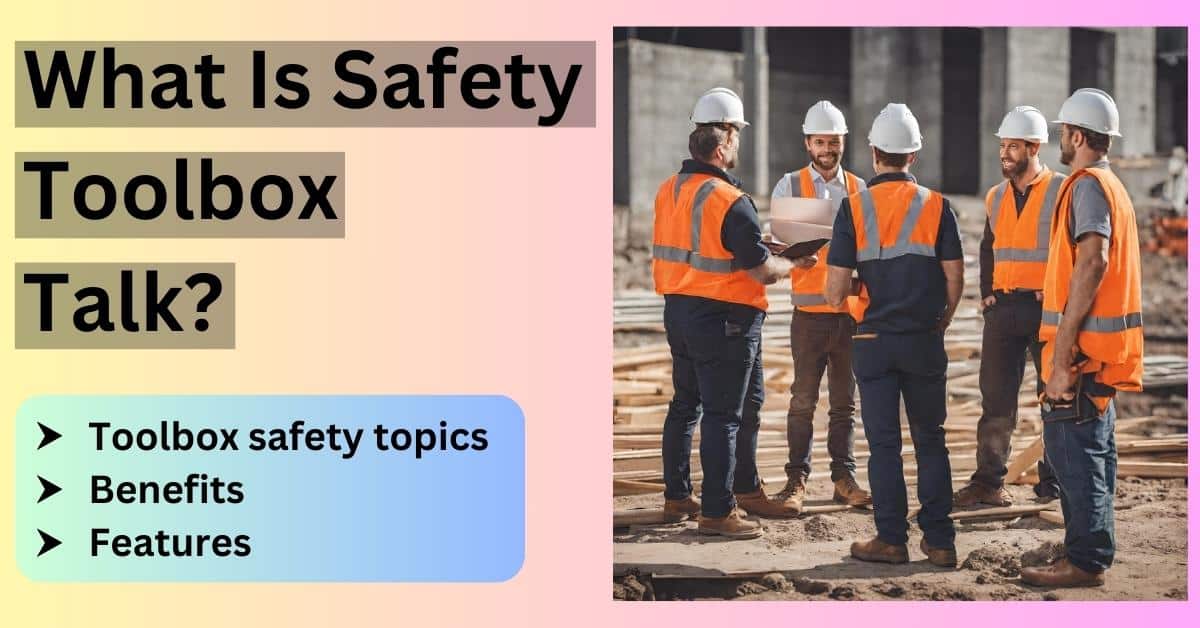
This keeps it interactive. Workers aren’t passive listeners—they’re problem solvers.
Avoid death-by-PowerPoint. These aren’t lectures. Stand in the field. Point to real equipment. Let someone else lead occasionally.
Common Mistakes That Kill Engagement Even well-intentioned talks fail when they follow stale patterns.
Mistake 1: Repeating the Same Topics Monthly Covering “PPE” every month breeds complacency. Rotate topics based on season, project phase, and incident trends.
Mistake 2: No Follow-Up Did the talk lead to change? Check back. “Last week we talked about ladder setup. Saw three of you using levelers today—great job.” Reinforcement works.
Mistake 3: Manager-Led, Not Team-Led When only supervisors talk, crews disengage. Rotate facilitators. Let a seasoned electrician lead the lockout/tagout talk.
Mistake 4: Ignoring Near-Misses A dropped tool, a trip, a spark near flammables—these are free teaching moments. Use them within 24 hours.
Mistake 5: No Documentation Without records, you can’t track progress or prove compliance. Use a simple sign-in sheet with topic, date, and key takeaways.
Integrating Toolbox Talks Into Daily Workflow
Make safety part of the rhythm, not an interruption.
- Schedule at natural pauses: Before the first task, during shift change, or after a break.
- Keep it consistent: Same time, same place—like a daily stand-up.
- Link to JSA (Job Safety Analysis): Align talks with current task risks.
- Use visual reminders: Post weekly topics near time clocks or break rooms.
One crew starts every day with a 7:45 AM huddle. The supervisor brings a single photo—a close call, a hazard, a win. They discuss it in under five minutes. No slides, no script. Just conversation.
Result? 40% drop in recordables over 18 months.
When to Adjust Your Toolbox Talk Strategy
Your topics should evolve.
- After an incident: Immediate deep dive into root causes.
- New crew members: Reinforce culture and expectations.
- Changing weather: Heat stress talks in summer, ice awareness in winter.
- New equipment or process: Train before rollout.
- Low engagement: Switch up format—use role-play, quizzes, or peer-led sessions.
Track what works. If slips keep happening despite talks, ask: Is the message clear? Are conditions truly safe? Are workers empowered to speak up?
Closing: Turn Talks Into Habits
Toolbox talks aren’t magic. They’re maintenance. Like oil changes for safety culture. The right topics, delivered with clarity and consistency, prevent breakdowns.
Stop recycling the same generic themes. Match your talks to real work, real risks, and real people. Use near-misses as fuel. Let workers lead. Close the loop with follow-up.
A great toolbox talk doesn’t just inform—it influences. And influence, repeated daily, becomes behavior.
Start tomorrow: pick one high-risk task. Gather the crew. Ask one question: “What could go wrong here—and how do we stop it?” That’s how safety wins begin.
Frequently Asked Questions
What is the best time to hold a toolbox talk? Right before work begins, when the team is assembled and focused. Early morning or post-break huddles work best.
How long should a toolbox talk last? Aim for 5 to 10 minutes. Long enough to cover the topic, short enough to hold attention.
Who should lead toolbox talks? Supervisors often lead, but rotating facilitators—including experienced workers—boost engagement and ownership.
Do toolbox talks need to be documented? Yes. Keep records of date, topic, attendees, and key points for compliance and tracking.
Can toolbox talks reduce accident rates? Yes—when they’re relevant, consistent, and tied to actual job risks. Sites with regular, high-quality talks see fewer incidents.
Should toolbox talks be the same every week? No. Rotate topics based on project phase, season, and incident trends to maintain impact.
How do you keep toolbox talks from becoming repetitive? Focus on specific behaviors, use real examples, encourage discussion, and vary delivery styles.
FAQ
What should you look for in Essential Toolbox Talk Topics for Safer Work Sites? Focus on relevance, practical value, and how well the solution matches real user intent.
Is Essential Toolbox Talk Topics for Safer Work Sites suitable for beginners? That depends on the workflow, but a clear step-by-step approach usually makes it easier to start.
How do you compare options around Essential Toolbox Talk Topics for Safer Work Sites? Compare features, trust signals, limitations, pricing, and ease of implementation.
What mistakes should you avoid? Avoid generic choices, weak validation, and decisions based only on marketing claims.
What is the next best step? Shortlist the most relevant options, validate them quickly, and refine from real-world results.